Residency Match Success: What Separates Top Applicants from the Pack
Residency Match Success: What Separates Top Applicants from the Pack
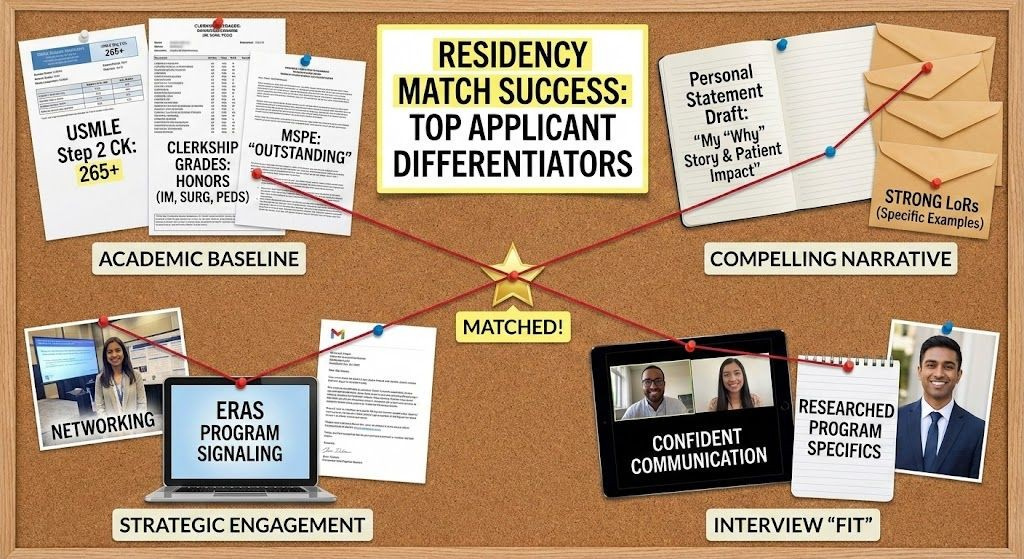
The residency match is competitive, but top applicants aren’t “lucky”—they follow predictable, repeatable patterns. After mentoring hundreds of medical students, I’ve seen the same elements appear over and over again in the strongest applications.
1. They Start Earlier Than Everyone Else
High-performing applicants begin shaping their story in MS1–MS2, not MS4. They build a consistent narrative, explore their specialty of interest, and create early momentum through shadowing, small research roles, and meaningful experiences.
2. They Build a Research Portfolio with Direction
Matching isn’t about collecting random publications—it’s about showing trajectory and relevance.
Top candidates:
- Choose projects connected to their specialty
- Take ownership roles (data collection, writing, stats coordination)
- Maintain consistent output over 12–24 months
Programs want students who can think scientifically and follow through.
3. Their ERAS Application Tells a Story
ERAS isn’t a list of achievements—it’s a narrative document.
The best applications:
- Have a cohesive theme (identity → interest → action → impact)
- Highlight growth, resilience, and curiosity
- Make the reader remember the student
The difference between a good and great ERAS is often storytelling.
4. They Master Letters of Recommendation
Top applicants choose letter writers who:
- Know them well
- Have worked with them clinically or academically
- Can describe their work ethic, judgment, and personality
A strong letter is personal, specific, and full of detail—not generic praise.
5. They Prepare for Interviews Like It’s a Skill (Because It Is)
Great interviewers are not naturally charismatic—they are structured.
They:
- Practice their personal narrative
- Build 3–4 polished stories (leadership, adversity, teamwork, patient care)
- Learn how to answer open-ended questions with clarity and confidence
Interviewing is often the single most important differentiator in final ranking.
Key Takeaway
Residency success isn’t reserved for “elite” students. It’s reserved for prepared students. And preparation is something you can build today—no matter your background, school, or test scores.